
Supply chain7 min read
Where Does a Shirt Go After You Let It Go?
Somewhere in your wardrobe is a shirt that still works perfectly. You just don't reach for it.
By Zain Qureshi, Founder, Second Spin SupplyLinkedIn (opens in a new tab)
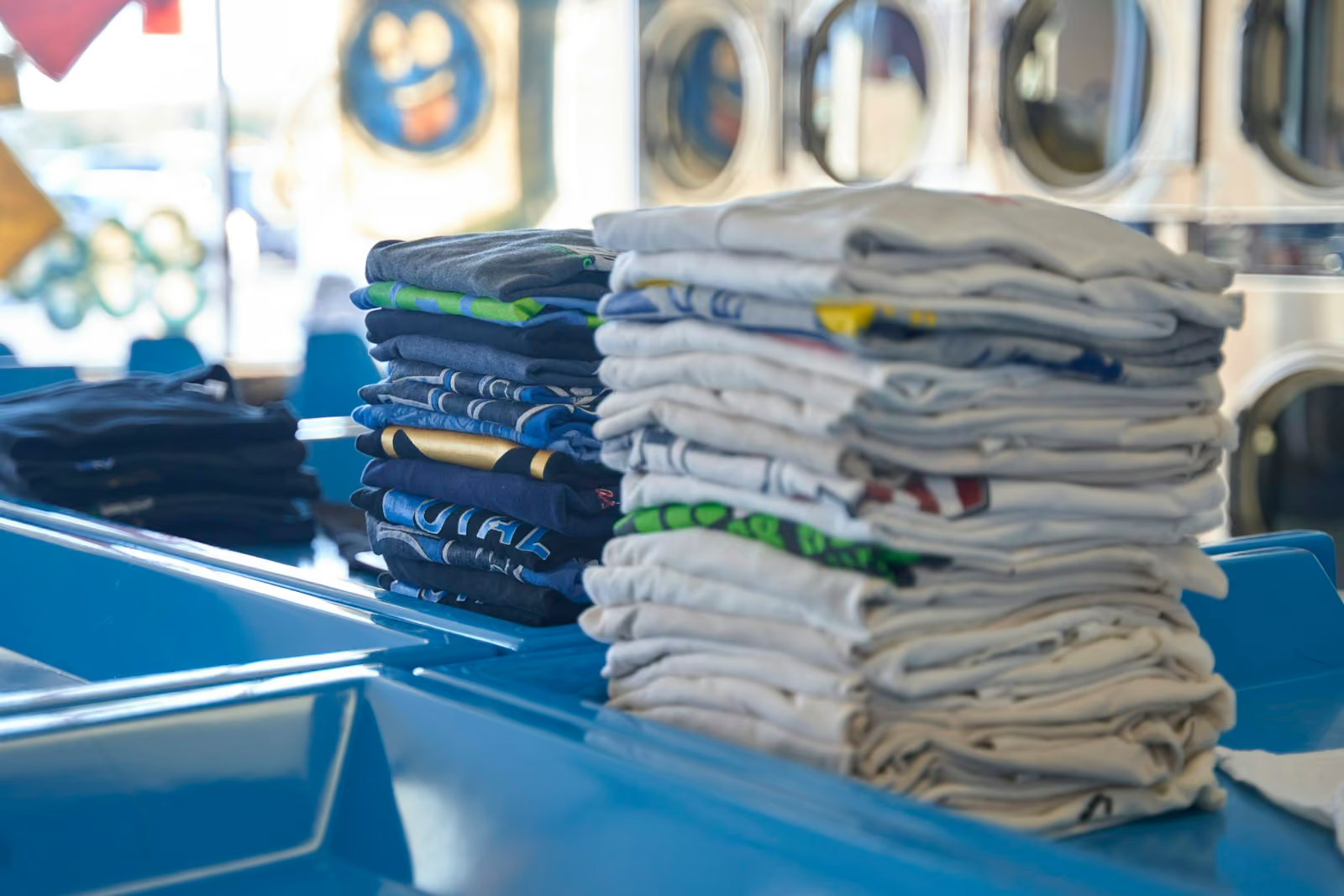
Maybe your size changed. Maybe your job did. Maybe you liked it on the hanger more than you liked wearing it. Whatever the reason, your relationship with the shirt can end well before the shirt's useful life does.
That gap is where secondhand begins.
People often stop needing clothes before clothes stop being useful. What happens next depends on who receives the garment, what condition it's in, and where someone else might want it.
There is more than one exit from a wardrobe
You can give the shirt to a friend. Sell it directly. Take it to a buy-sell-trade shop. Donate it to an organization that accepts clothing. Each choice begins a different route.
At a buy-sell-trade store, someone evaluates whether the garment fits the shop's buying needs. Buffalo Exchange, for example, describes a model in which people bring clothing and can receive cash or trade for accepted items. That is a purchase from the previous owner. Buffalo Exchange's selling overview (opens in a new tab)
A donation follows the receiving organization's process. Goodwill says its routes can include stores, ecommerce, outlets, and, for items that don't sell through its retail channels, sorting into reuse, recycling, downcycling, or export markets. That describes Goodwill's published system; other organizations may operate differently. Goodwill's explanation of donated goods (opens in a new tab)
The word “secondhand” tells you that something has been owned before. It doesn't tell you whether it was donated, bought from an individual, sourced from a wholesaler, or passed through several of those settings.
The first sorting decision is about usefulness
Picture an ordinary polo shirt as a teaching example. We don't know its owner or its actual route.
A person evaluating it can ask several different questions. Is it wearable? Does it have a stain? Is the collar distorted? Is the size readable? Does it suit a particular shop's customers? Is it worth the time required to prepare and present it?
Those questions separate condition from commercial fit.
A sound shirt can be wrong for one store's assortment. A distinctive garment with visible wear can still appeal to a buyer who understands that wear. A damaged piece may need repair or another route altogether.
This is one reason a rejected item isn't automatically a useless item. A store is choosing for its own customer, space, and resources. It isn't issuing a final verdict on every possible future wearer.
What wholesale adds to the journey
An individual shopper can spend an afternoon finding one shirt. A retailer needs enough suitable stock to build an offer and return to it consistently.
Wholesale helps organize that task. Instead of starting with every kind of garment at once, a buyer might consider a category, a condition range, or a selected assortment. The useful work lies in making the group understandable: what it contains, where it varies, and which buyer it might serve.
That doesn't make every wholesale lot a good one. A broad label such as “branded mix” leaves important questions unanswered. A retailer still needs to assess the actual pieces and the terms of the purchase.
At Second Spin Supply, we connect buyer relationships in Austin with inventory operations in Karachi. The commercial purpose of that connection is specific: helping resale businesses discuss handpicked, sorted secondhand apparel with a person they can reach.
It isn't a claim that every shirt on an Austin rack traveled through Pakistan—or through us.
Why a garment might travel farther
Garments can move between markets as businesses look for a match between available stock and customer demand. Category sorting, buying preferences, and distribution can all be part of that process.
There is documented trade behind the broad idea. World Bank WITS data show Pakistan reporting imports from the United States in the 2024 category “worn clothing and other worn articles.” Those are aggregate trade records. They cannot identify the path of a particular shirt. WITS, Pakistan imports, HS 630900, 2024 (opens in a new tab)
For a shopper, the useful distinction is between a possible industry route and a documented item history. A seller might know the lot's supplier and dispatch location while knowing little about the garment's earlier owners.
You should be able to ask about that boundary and get a plain answer.
“We know where we bought it; we don't know its first owner” can be a perfectly credible explanation. A wonderfully detailed story without records is less useful.
The next shop gives the shirt context
Consider a UT Austin student looking at a shirt in a resale store. The decision at the rack might be wonderfully ordinary: does it fit, does the fabric feel good, and will it work with the jeans already in the closet?
The store has made those questions easier to answer by presenting the garment individually. A clear price, readable measurements, visible wear, and a place to try it on all help turn a possible purchase into a decision.
For an online shop, photography and description do some of that work. A photograph of the label answers a different question from a photograph of the whole garment. A measurement answers a different question from “oversized.”
A secondhand garment becomes easier to buy as its unknowns get smaller. The fabric may be unchanged. The information around it can improve substantially.
That is why sorting and presentation matter to the person at the final rack, even if they never think about wholesale.
What can you reasonably ask?
Start with questions that affect your purchase.
- What wear or damage should I know about?
- Have any repairs or alterations been identified?
- What are the actual measurements?
- What care has the seller performed, if any?
- Which claims about age, material, or origin can the seller support?
- What are the store's return or exchange terms?
Don't infer a cleaning process from a neat rack. Sorting, grading, laundering, and authentication are separate activities. If a seller has documented one of them, that doesn't automatically establish the others.
Follow the garment's care information and ask for guidance when an unfamiliar material or construction makes preparation uncertain. You can approach secondhand clothing with the same practical attention you would give any garment you plan to wear.
A second life still needs a next use
It's tempting to tell the clothing journey as a perfect circle: somebody donates, somebody buys, everybody wins.
Real systems have branches. Some garments find another wearer quickly. Others need work, move through additional markets, become material for other uses, or fail to find a useful destination. An export record by itself says nothing about the eventual outcome of every item in the shipment.
You don't need to turn shopping into an investigation of the entire world economy. You can make a useful decision at the scale available to you: choose clothing you want to wear, care for it appropriately, and pass it on thoughtfully when you're finished.
If donating, check what the receiving organization accepts. If selling, describe condition honestly. If buying, judge the item in front of you rather than expecting either perfection or a problem simply because it's secondhand.
The question I'd like shoppers to ask
I'd like more people to ask, “What makes this a good next garment for me?”
It brings attention back to fit, fabric, usefulness, and taste. The earlier journey explains how the choice became available. Your own use gives that journey a reason to continue.
For the part of the story about sorting and geography, read why Karachi belongs in the clothing conversation. For the buyer's checklist, see what resale-ready means.
If you buy for a shop and want to understand the stock behind your next rack, start with the questions. WhatsApp Zain (opens in a new tab) or Email Zain with the categories you're considering.