
Sourcing7 min read
Fleek, Depop, Whatnot: Give Each Platform the Right Job
The search asks for one winner. Your business may need two different tools.
By Zain Qureshi, Founder, Second Spin SupplyLinkedIn (opens in a new tab)
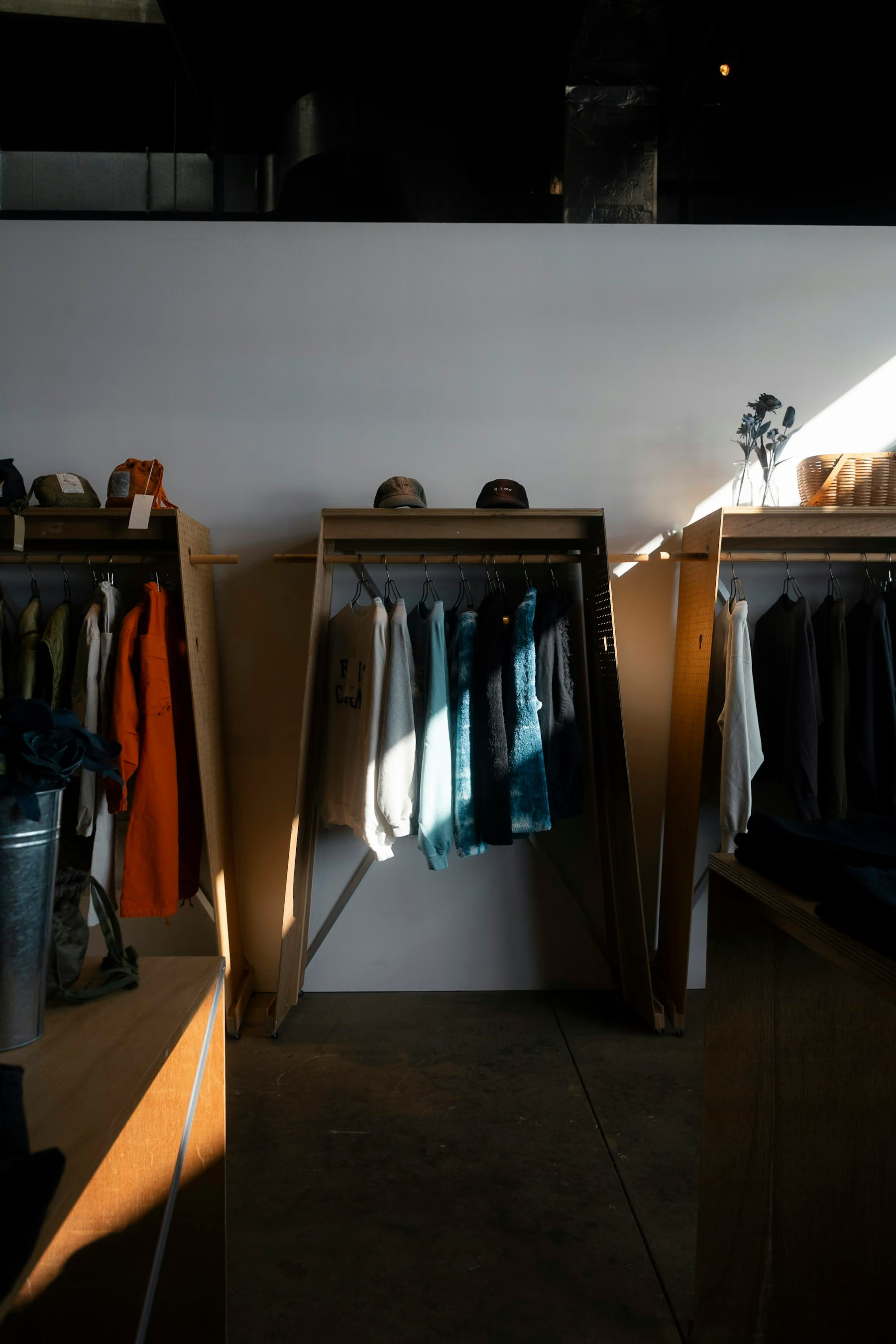
Fleek is a wholesale sourcing marketplace. Depop and Whatnot are places where sellers can reach buyers for the stock they own. The practical comparison starts by separating the purchase of inventory from the sale to your customer. Fleek marketplace (opens in a new tab), Depop seller guidance (opens in a new tab), Whatnot seller documentation (opens in a new tab)
Choose a selling method, then choose a supply route that can support it. A sourcing app doesn't resolve the work of running a shop. A selling app doesn't resolve what belongs in your next order.
Follow the two decisions separately
Suppose you sell clothing through individual listings. You need stock you can inspect, describe, photograph, price, store, and retrieve. Your sourcing decision should help you perform those jobs.
Suppose instead you organize live shows around a clear category. You need enough coherent stock to prepare a sequence, explain garments confidently, and fulfill the resulting orders accurately. Your sourcing brief should reflect that workflow.
These are illustrative operator situations, not platform performance statistics. They explain why the same wholesale lot can be attractive to one seller and awkward for another.
You can buy through a marketplace and sell through another. You can source directly and use several selling channels. Keep a clear record of which relationship governs each purchase and each sale.
For a closer look at the selling decision, see Whatnot versus Depop versus eBay.
What a sourcing marketplace can make easier
Fleek's marketplace puts wholesale offers from suppliers into a browsing and transaction setting. For a buyer exploring categories or comparing unfamiliar suppliers, that structure can be useful.
The platform also publishes a buyer-protection process. Its full guide says issues should be raised within five days of receipt, explains review of not-as-described orders, and makes partial returns dependent on supplier agreement. Read the full terms for your transaction; outcomes depend on the circumstances. Fleek buyer protection and returns (opens in a new tab)
That process is a real consideration. It doesn't remove the need to inspect the offer, understand grading, or preserve evidence. It does mean a buyer can evaluate the platform's documented role alongside the supplier's description.
The attraction may be comparison, a familiar transaction process, or a published route for raising issues. Those are legitimate reasons to use a marketplace even when direct suppliers are available.
What a direct relationship can make easier
A direct supplier relationship can be useful when you have a clear brief and want an ongoing conversation about it.
The work might involve asking for a particular category, explaining your condition threshold, reviewing current stock videos, and using feedback from one order to sharpen the next. The value depends on how the supplier handles those tasks in practice.
At Second Spin Supply, Zain handles that direct relationship: discussing stock, explaining assortment, sharing videos, and staying involved through delivery. The buyer still needs the exact offer, written terms, and clarity about the actual order.
Direct access also means you need to understand how problems are handled without assuming a marketplace's process applies. Ask who is responsible, how discrepancies are reviewed, and what terms you've agreed to.
A direct relationship earns its value through useful answers and consistent follow-through. The absence of an intermediary doesn't prove a better price, better stock, or better service.
Compare the evidence, not the interface
Use the same buying brief across the routes you are evaluating.
| Decision | On a sourcing marketplace | In a direct supplier conversation |
|---|---|---|
| What exactly is offered? | Read the listing and request clarification from the supplier | Request a dated lot description and relevant stock evidence |
| What does the grade mean? | Read platform and seller terms, including exceptions | Obtain the supplier's written definition and examples |
| What will I pay? | Review the full checkout and order-specific charges | Review the full quote and what remains payable separately |
| How are issues handled? | Read the platform's applicable process and deadlines | Agree on the supplier's process and terms before purchase |
| Can I replenish? | Evaluate the supplier's next available offer | Discuss which selection criteria can be repeated |
| What do I need to retain? | Listing, messages, images and transaction records | Quote, messages, images and order agreement |
This isn't a scorecard with a predetermined winner. A route that works well for a repeat category may be less useful when you are testing an unfamiliar one.
Make the comparison at order level. Two similar-looking offers may differ in size mix, selection detail, included transport, or the preparation work they leave behind.
A video call is evidence only if it resolves something
Both marketplace-based and direct sourcing can involve conversations about stock. The important question is what the evidence establishes.
Do you see the exact garments? Are you reviewing a representative sample? Who defines “representative”? Are known flaws shown? Can you connect what you approved to the order record?
A personable seller and an impressive rail are encouraging. The buying decision still needs specifics.
I'd ask to stop on the details that matter to the intended selling channel. If fit is central, show the measurements. If it's a jacket show, show the closure and lining. If it's a curated vintage offer, explain what supports the age description.
Use the seven pre-order questions to keep the conversation focused. The same questions can help whether the video arrives through a platform or directly from a supplier.
Repeat sourcing means repeating a standard
A successful order can make you want to buy the same thing again. With secondhand stock, the useful repeat is often the buying standard rather than the exact garments.
Write down what worked: category, sizes, condition, information quality, preparation load, and suitability for your customer. Then ask what can be supplied against that brief next time.
“Send the same quality again” is less helpful than explaining the details that made the previous assortment work. It also leaves the supplier to guess which part of the order you valued most.
Keep room for availability to vary. An ongoing relationship should make changes easier to discuss, not make every future lot look identical in your imagination.
When I'd favor each route
I'd consider a sourcing marketplace when comparing unfamiliar offers, when its documented transaction and issue process matters to the purchase, or when a particular supplier's listing suits the need better than the direct alternatives I've evaluated.
I'd consider a direct relationship when a supplier can engage with a clear recurring brief, show the relevant stock evidence, and offer terms I understand and can work with.
I'd pause either purchase if the actual contents, condition, cost, or issue process remain too unclear for the commitment. That is a decision about the offer, not a verdict on every business using that route.
And I'd avoid splitting a single transaction between channels casually. If an order originates on a marketplace, follow its current rules and keep the protections and records associated with the transaction clear. A direct-sourcing article is not a reason to bypass an existing marketplace agreement.
The first order should teach you something
After delivery, review how the route performed. Did the evidence match the stock? Did the preparation fit your capacity? Were questions answered clearly? Did the order record make discrepancies easy to describe?
Separate those findings from selling outcomes. Poor photographs in your own shop don't establish that a supplier sent the wrong stock. Undisclosed defects don't become acceptable because one desirable piece sold.
Give each part of the business its own test. It makes the next decision much clearer.
SSS may be useful when your business needs a direct conversation about branded secondhand apparel, supported by its Austin-facing buyer relationships and Karachi-connected inventory work. Another route may fit a particular order better. A good comparison should help you recognize both.
WhatsApp Zain (opens in a new tab) or Email Zain with the buying brief you're using elsewhere. Ask about current stock and compare the offer on the same terms.