
Austin4 min read
Keep Austin Weird. Give the Rack Some Room.
Put a pearl-snap beside a running jacket beside a faded band tee. You don't need to make them agree.
By Zain Qureshi, Founder, Second Spin SupplyLinkedIn (opens in a new tab)
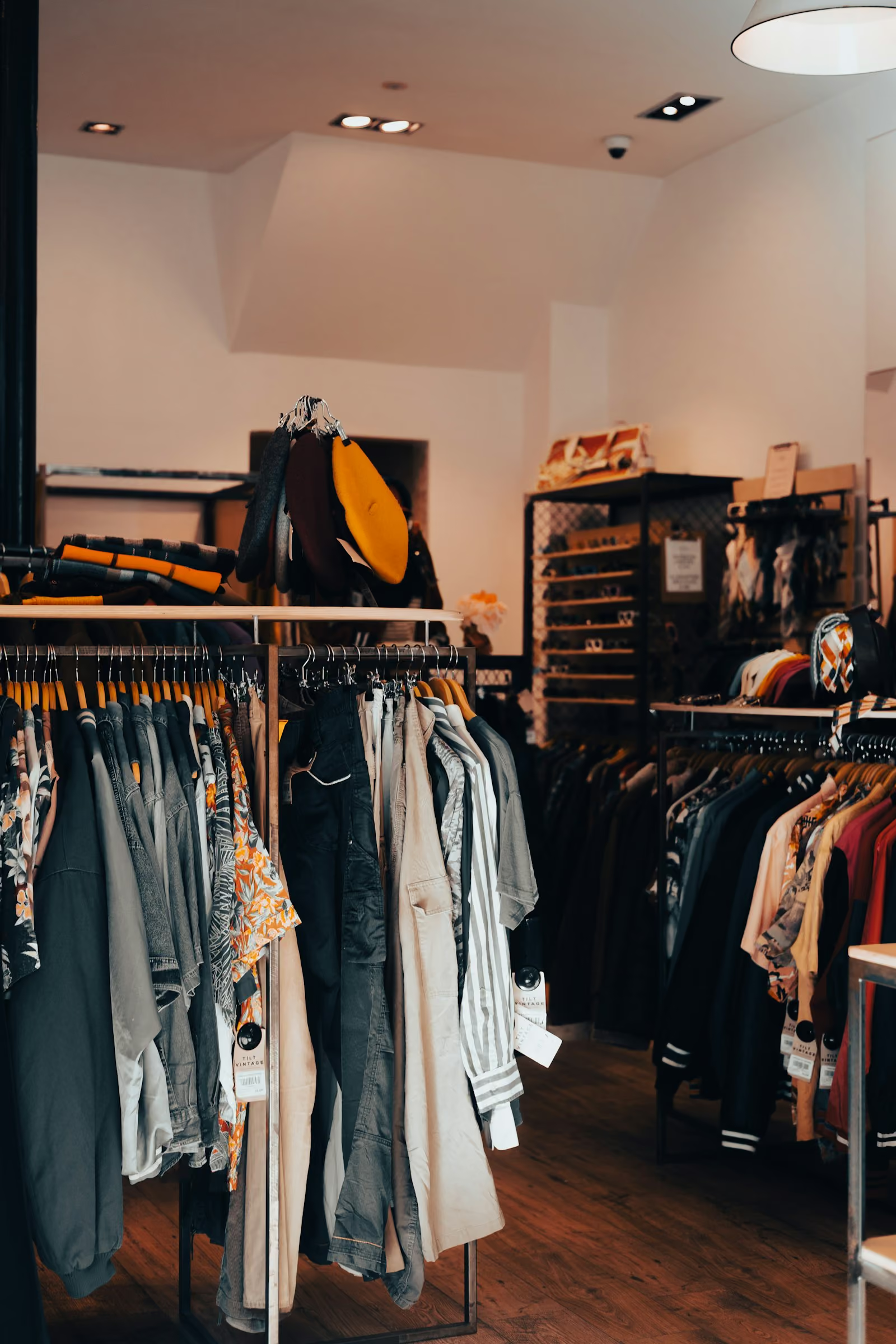
That is one of the pleasures of secondhand retail: a rack can hold several ways of being a person. Workwear can live beside something delicate. A useful plain sweatshirt can sit near the piece that makes someone stop halfway through a sentence.
A good resale shop gives taste somewhere to happen. For an Austin-facing supplier, that is a more useful ambition than trying to reduce the city to one look.
The slogan isn't a buying brief
“Keep Austin Weird” has a long association with the city's independent-business identity; Visit Austin describes that connection in its account of the phrase. Visit Austin's local context (opens in a new tab)
But the slogan doesn't tell a shop owner which waist sizes to buy, how much knitwear to carry, or whether their customers want a heavily worn jacket.
Those decisions belong to the particular business. A store near campus, a specialist vintage shop, and an online seller based in Austin can have different customers and different reasons for choosing the same garment.
Calling everything an Austin aesthetic makes those differences disappear. Better to ask what the retailer actually knows about the people who walk through its door.
A clothing district can hold different kinds of value
On Guadalupe, the published store descriptions show some of that range. Pavement describes an assortment of new, vintage, and gently used clothing, including items bought from the public. Leopard Lounge describes a focus on vintage clothing and Americana. Pavement (opens in a new tab), Leopard Lounge (opens in a new tab)
One shopper might want an easy everyday piece. Another may be looking for a particular era. Another wants to browse until something changes the outfit they had in mind.
The useful retail work is making those choices understandable. Curation, condition information, and a coherent price can all help. A store doesn't need to suit everyone to be valuable to the people it serves.
For actual addresses and a route, use our Guadalupe shopping guide.
Individuality needs ordinary infrastructure
A distinctive shop still needs stock to arrive, garments to be assessed, racks to be organized, and people to answer questions. The interesting front room depends on fairly unglamorous work.
As a supplier, I'd rather support that work than tell a retailer what Austin should wear.
At Second Spin Supply, the relevant conversation starts with categories, sizes, condition, quantity, and the customer the shop serves. Our Austin-facing buyer relationships connect with inventory work in Karachi. The two places matter because clothing decisions need information moving between them.
If a buyer wants denim with character, “character” needs an explanation. If the shop needs cleanly presented polos, the useful next step is to define acceptable wear and preparation. Taste and operational clarity can share a sentence.
Keep more than the purchase in the picture
Buying secondhand is one way to participate. Repairing something you already like is another. So is selling a garment honestly when it no longer fits your life, or donating it to a place that can use it.
Austin's public reuse resources make that broader picture practical. The City describes its Reuse Directory as a way to find places to buy, sell, donate, rent, and repair. You can choose the route that suits the item instead of treating every closet clear-out as the same task. Austin Resource Recovery (opens in a new tab)
No moral performance required. Sometimes you need a jacket. Sometimes you need a button replaced. Sometimes the best wardrobe decision is wearing the thing you own again.
Let the city remain more interesting than the campaign
There is a tempting shortcut in local marketing: a boot, a mural, a guitar, a familiar slogan, then a claim to belonging.
I'd rather look at the garment and the person it might serve. A Western detail can be part of an outfit without becoming a costume. A band tee can matter to someone for the music, the print, the fit, or all three. None of those choices needs permission from a city moodboard.
That gives a resale retailer a useful question: does this assortment leave enough room for the customer to make it their own?
It gives a wholesaler a useful responsibility too: help the retailer understand the stock without ironing all the variation out of it.
Good clothes can keep moving through different wardrobes and mean different things along the way. Austin doesn't need every rack to tell the same story.
If you run a resale shop, tell Zain what makes your customer and your assortment particular. WhatsApp Zain (opens in a new tab) or Email Zain to talk through the stock you're looking for.